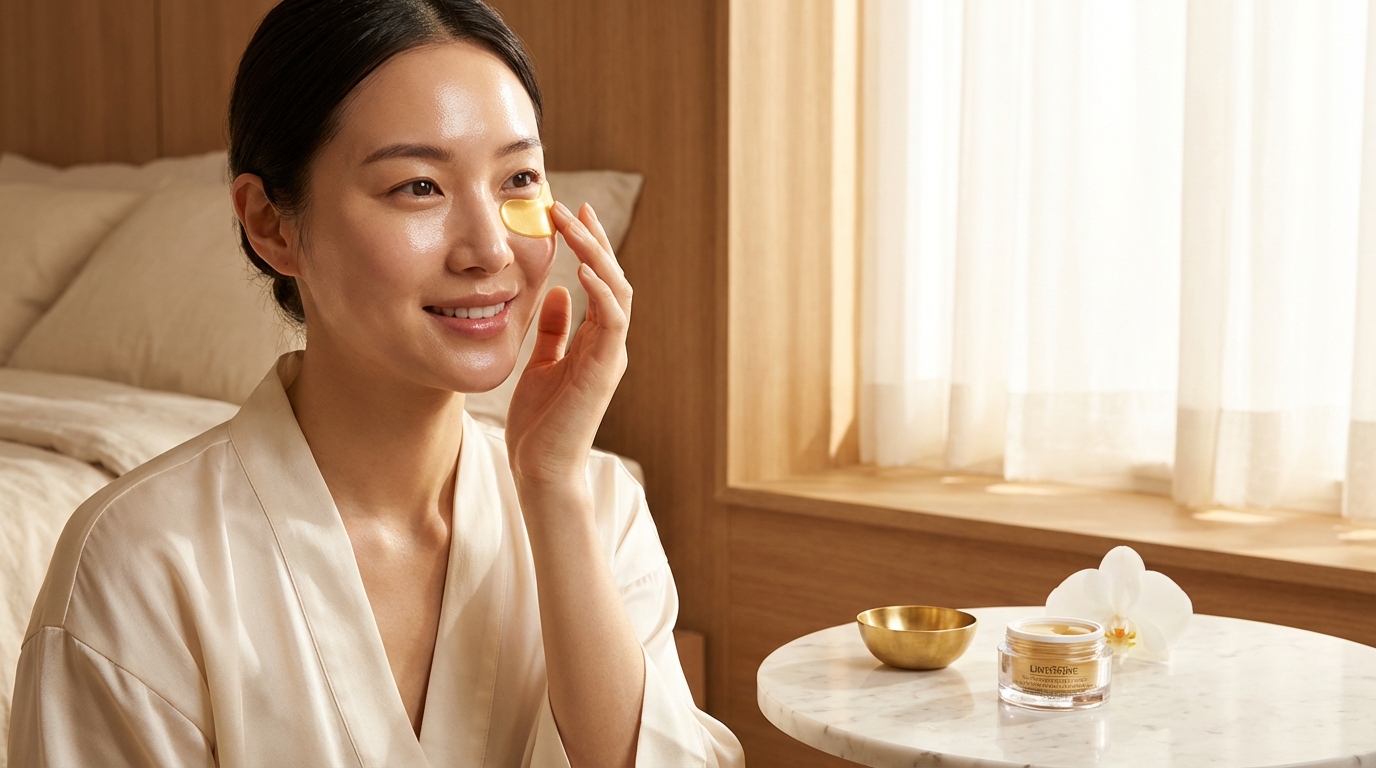
When Dr. Soo-Yeon Chae was cataloguing damaged manuscripts at Seoul National University's Kyujanggak Institute last spring, she didn't expect to stumble onto something that would connect a 15th-century royal beauty ritual to one of the most talked-about skincare products in America.
But buried in a Joseon-era text called the Dong-ui Yong-an-rok ("Eastern Treatise on Bright Eyes"), she found something remarkable: detailed instructions for creating silk patches infused with hydrolyzed fish collagen and fermented pearl powder, applied beneath the eyes of court women to restore what the text calls "the luminance of youth."
"I nearly dropped the manuscript," Dr. Chae told us. "The ingredients, the method of application, even the 20-minute treatment time — it mapped almost perfectly onto modern hydrogel eye patch technology. These women were doing peptide delivery 600 years ago."
The Dong-ui Yong-an-rok wasn't a household beauty guide. It was reserved for the royal court — specifically, for the queen consort and her attendants. The text describes sourcing collagen from freshwater fish in the Hantan River, fermenting it with rice enzymes, then layering it onto thin silk strips with ground pearl and ginseng root extract.
The patches were applied beneath the eyes at dawn, left for "the time it takes to brew tea twice" (roughly 20-25 minutes), then removed. Court records suggest this was practiced daily during winter months, when cold winds made the delicate under-eye skin especially vulnerable.
The Modern Connection
What makes this discovery relevant today is the striking similarity to a product that's been quietly dominating the American skincare market: Olenis Bright Eyes Collagen Patches.
The small brand, which has sold out three times in the past year, uses a hydrogel matrix infused with collagen peptides, hyaluronic acid, niacinamide, and 24K gold particles. The patches create an occlusive seal against the under-eye area — the same principle described in the Joseon manuscript — delivering concentrated actives directly into the skin for 20-30 minutes.
Side by Side: 1420 vs. 2026
Collagen Source
Then: Hydrolyzed freshwater fish collagen • Now: Marine collagen peptides
Delivery Method
Then: Silk patch with occlusive seal • Now: Hydrogel patch with occlusive seal
Brightening Agent
Then: Fermented pearl powder • Now: Niacinamide + 24K Gold
Treatment Time
Then: ~20 minutes ("two tea brewings") • Now: 20-30 minutes
Price
Then: Reserved for royalty • Now: $23 for 60 patches ($0.38/treatment)
"It's not that Olenis copied an ancient formula," Dr. Chae clarified. "It's that good science converges. The Joseon court physicians understood, through centuries of observation, exactly what modern dermatology has confirmed through clinical research: occlusive peptide delivery to the periorbital area works."
And it works fast. Modern clinical studies on hydrogel patches show measurable improvement in skin hydration within a single 20-minute session, with cumulative anti-wrinkle and de-puffing effects appearing within 7-14 days of consistent use.
Why It's Selling Out
The Olenis patches have built a following not through marketing budgets, but through word of mouth. With a 4.8-star rating across 47,000+ customers, the product has hit that rare inflection point where demand simply outpaces supply.
At $23 for a jar of 60 patches, the per-treatment cost is less than 40 cents — compared to $3-$5 per application for luxury eye creams that, according to dermatologists, deliver far less active ingredient to the skin.
"The beauty industry has spent decades convincing women that more expensive means more effective," says cosmetic chemist Dr. Rachel Nguyen. "These patches are proof that isn't true. The delivery mechanism matters more than the price tag."


